
ADA and Inclusive Playground Design Basics
An inclusive playground welcomes children of all abilities. This guide covers the basics of accessible routes, surfacing, ramps and events.
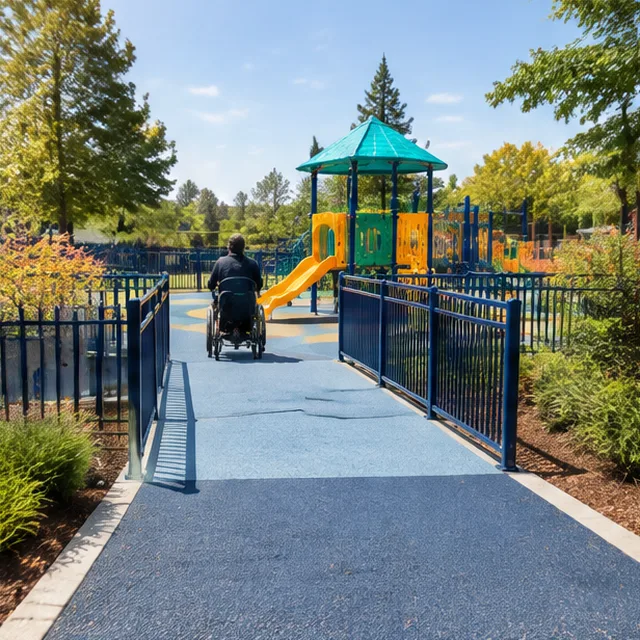 GuidePlayground guide
- Plan the route from parking to the play area first
- Choose firm, stable surfacing on accessible routes
- Mix ground-level events with ramp and transfer access
- Rules depend on the type of facility, so check what applies to yours
Start with the route
Children cannot play on equipment they cannot reach. A firm, stable route runs from the parking space or sidewalk to the play area and to the main events. Slopes are gentle, and turning spaces are wide enough for a wheelchair.
Check the route yourself with a wheelchair or stroller before you approve the plan.
Surfacing and events
Bound surfaces such as poured rubber and tile support wheels well. Loose fill can be hard to cross. A mix of ground-level events, ramps and transfer stations lets more children reach more of the play.
Sensory panels, wide slides and inclusive swings add to the welcome.
Rules and standards
The Americans with Disabilities Act and its accessibility standards for play areas set requirements for many public facilities. The details depend on the facility type and the number of play components. We explain how they apply and help you ask the right questions of your local office.
An accessible playground is better than the minimum when you plan beyond it.
Mistakes to avoid
- Treating accessibility as an add-on
- Using loose fill on the only route
- Building ramps that lead to dead ends
- Forgetting seating and shade for caregivers
One practical tip
Walk the route with a wheelchair, a stroller and a cane; each reveals different obstacles.
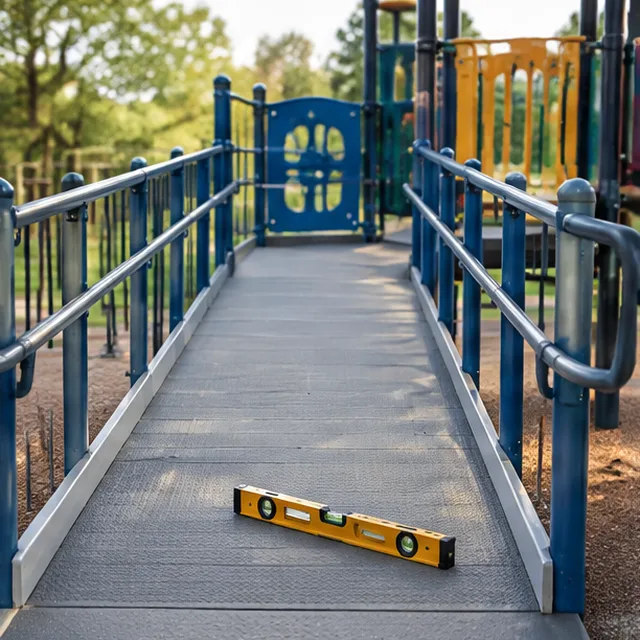
Accessible Ramp Planner
Ramp length and landings for the height you need to climb.
Open the toolA few more answers
Does every playground need to be accessible?
Requirements depend on the type of facility and the rules that apply. We help you review them.
What is a ramp slope limit?
A common accessible ramp rule is one inch of rise for every twelve inches of run. The Accessible Ramp Planner on this site shows the math.
Services that go with this guide
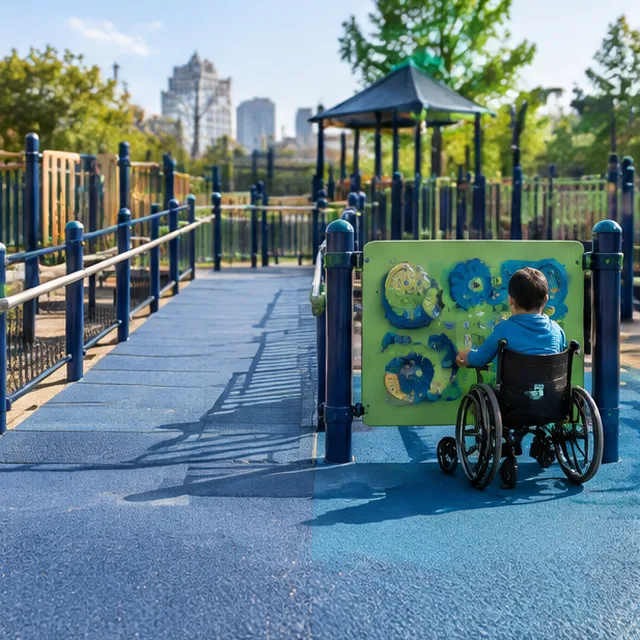 Inclusive 01ADA Accessible PlaygroundsPlaygrounds planned so every child can reach and enjoy them
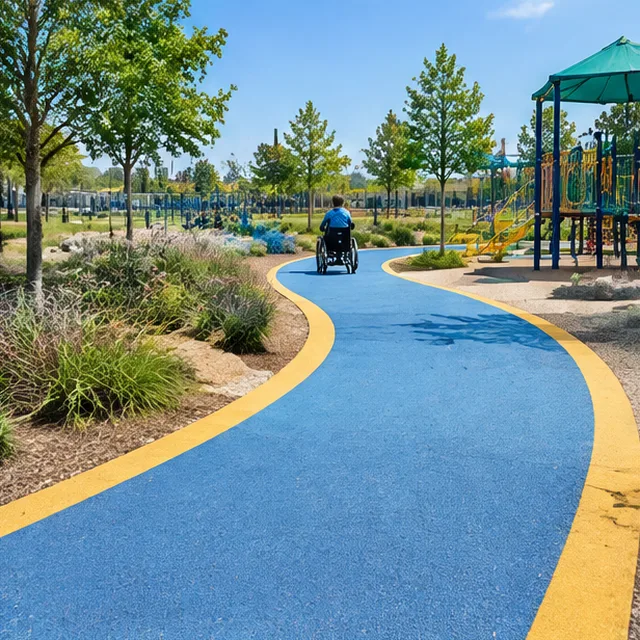 Inclusive 06Accessible Surfacing and PathwaysFirm, stable surfaces for wheels, walkers and little feet
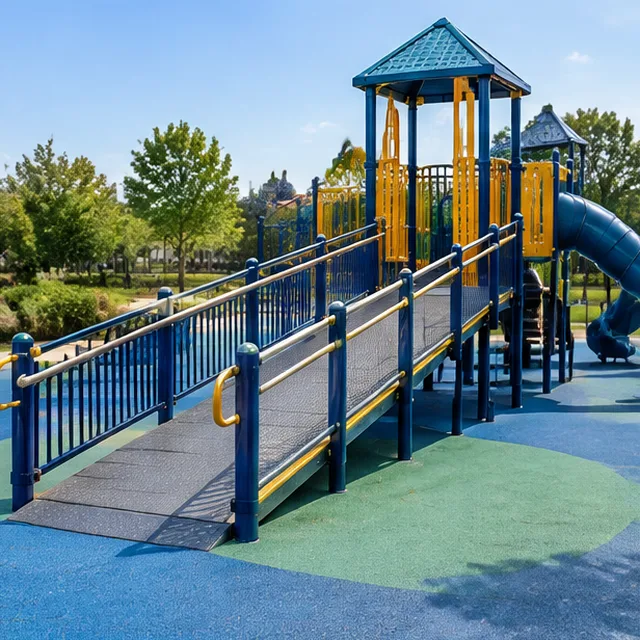 Inclusive 03Ramps, Transfer Stations and PlatformsThe pieces that connect children to higher play events
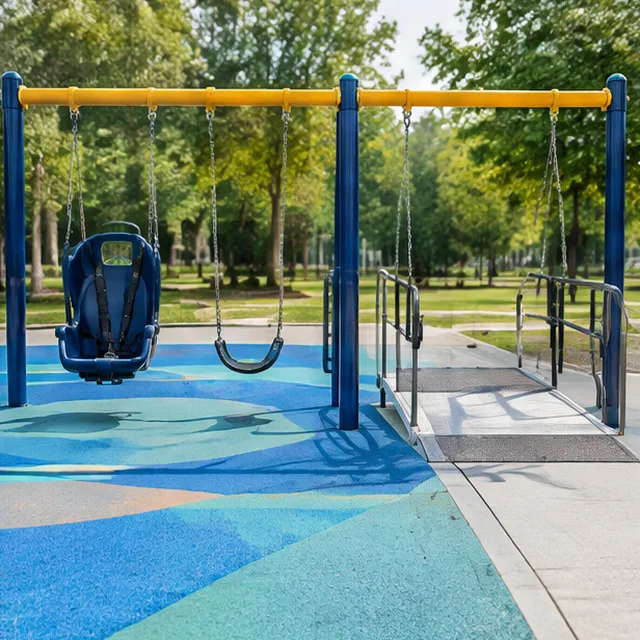 Inclusive 02Inclusive Swings and SeatsSwings that support more children, from belts to full-support seats
No service matches that search. Try a shorter word.
Call or send the form for a free estimate. A real person answers.