
Playground Surfacing Types Compared
Surfacing is what stands between a fall and the ground. This guide compares poured rubber, rubber tile, engineered wood fiber, rubber mulch and turf in plain terms.
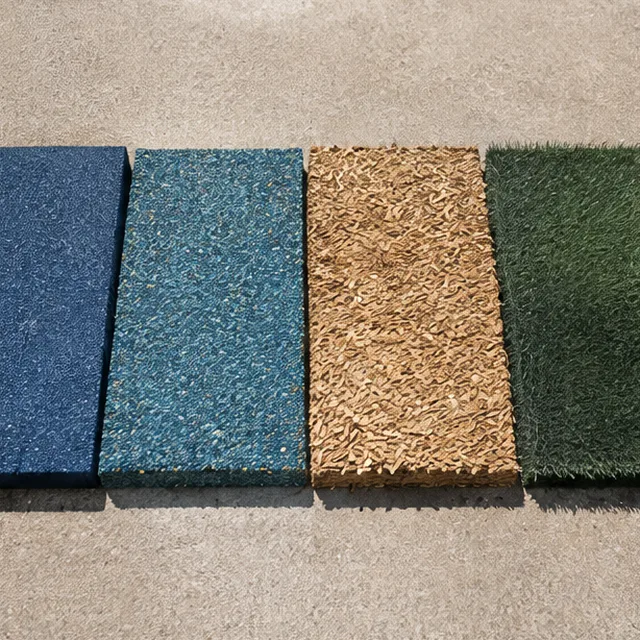 GuidePlayground guide
- Poured rubber is seamless, firm and low in upkeep but costs the most up front
- Rubber tile installs fast and lets you replace single tiles
- Engineered wood fiber and rubber mulch cost less but need regular care
- Whatever you choose, match it to the tallest platform on your equipment
Bound surfaces
Poured-in-place rubber and rubber tiles are called bound surfaces. They are firm enough for wheels and strollers, stay in place and need little raking. Poured rubber is seamless and can carry patterns and colors, while tiles can be swapped one at a time.
Both need a stable base and good drainage, and both cost more up front than loose fill.
Loose-fill surfaces
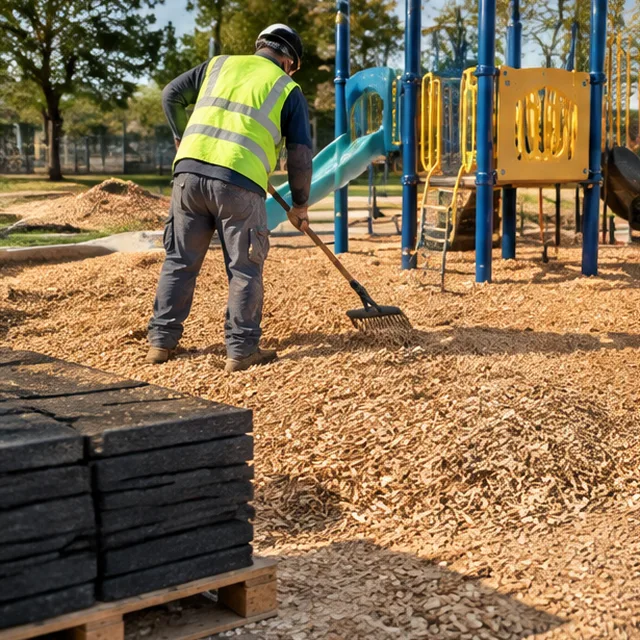
Engineered wood fiber, rubber mulch, sand and pea gravel are loose-fill surfaces. They cost less up front and can look natural, but they scatter, compact and need topping up. They also take more effort for wheels and walkers to cross.
A strong border and a drained base help loose fill stay where it belongs.
Matching surface to equipment
Every surface has a rated critical height at a given thickness or depth. The platform height of your tallest piece must be within the rating. Ask the manufacturer for the rating of the exact product and thickness you buy, and keep the paperwork.
Accessible routes should be firm and stable, so many sites use a bound surface on the routes and loose fill elsewhere.
Mistakes to avoid
- Choosing the surface before the equipment
- Ignoring drainage under the surface
- Forgetting to plan for upkeep
- Skipping the border around loose fill
One practical tip
Mark the required loose-fill depth on a post at the edge of the play area, so anyone can check it in a glance.
Surfacing Calculator
Cubic yards, tiles or turf for the area you need to cover.
Open the toolA few more answers
Which surface is best?
It depends on budget, upkeep, accessibility and climate. We compare options for your site.
How often must loose fill be topped up?
It depends on use and weather. A depth check on a regular schedule tells you.
Services that go with this guide
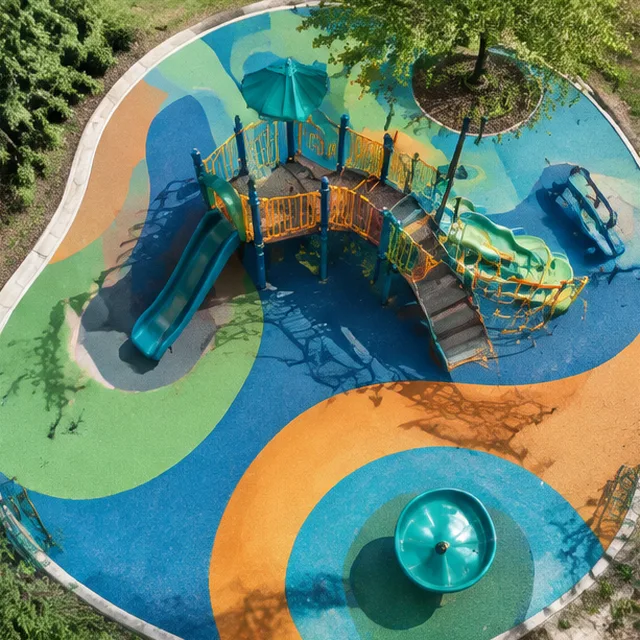 Surfacing 01Poured-in-Place Rubber SurfacingSeamless, colorful rubber that cushions every fall
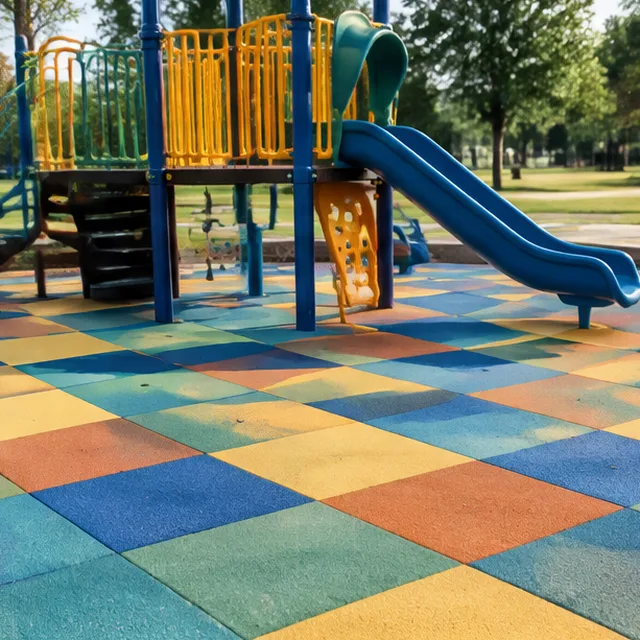 Surfacing 02Rubber Tile SurfacingInterlocking tiles that install fast and can be replaced
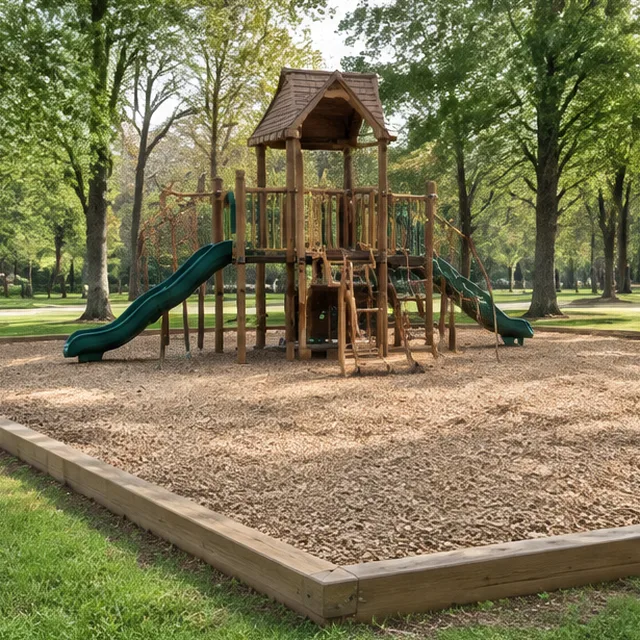 Surfacing 03Engineered Wood Fiber SurfacingA natural-look, budget-friendly loose-fill surface
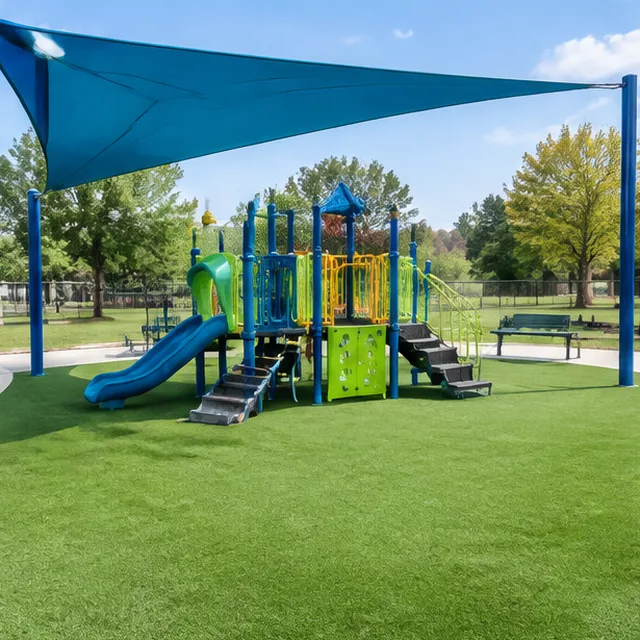 Surfacing 05Synthetic Turf Playground SurfacingGreen, soft turf with a cushion layer underneath
No service matches that search. Try a shorter word.
Call or send the form for a free estimate. A real person answers.